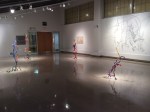
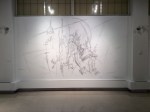
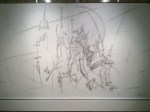
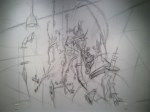
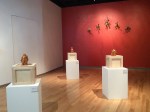
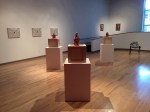
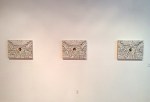
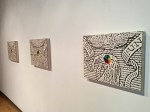
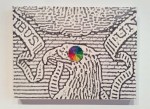
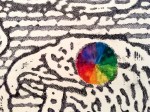
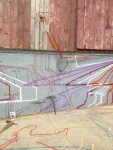
My solo exhibition Color Coded opened recently at Washington and Jefferson College’s Olin Art Gallery, marking the first time that the entire Color Coded series (2005-2012) has been exhibited in the same venue. The most fun part of this show, besides getting nearly a decade’s worth of anatomically-inspired artwork under one roof, was creating a large scale graphite wall drawing specifically for the gallery. Drawing directly on the wall definitely added a fresh new dimension to the overall exhibit, and the monochromatic quality of the graphite was a nice contrast to the layered, multicolored qualities of the works in this series. Color Coded is on display from October 30-December 6, 2015.
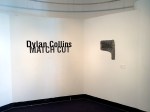
After an intense summer filled with numerous teaching obligations & round-the-clock art-making, I am happy to announce the opening of my solo exhibition Match Cut in the West Virginia University Creative Arts Center’s Laura Mesaros Gallery. On view from September 1-October 2, this show explores our collective need for classification and organization, especially as the desires and limitations of our organic bodies conflict with this quest for order. I use various fabrication techniques and meticulous craftsmanship to explore these conceptual interests, manipulating iconic imagery & familiar objects from our educational, governmental, and scientific institutions in order to draw attention to the impermanent & transitory nature of cultural authority.
This exhibition takes its title, Match Cut, from a film editing technique where seamless transitions between scenes help draw together the visual, metaphorical connections between objects and actions. I drew inspiration from this cinematic device, creating a series of cast & forged metal sculptures, mixed media panel works, and manipulated found object pieces that are cozily familiar yet imbued with surreal, dreamlike qualities. I really like the way this new body of work fits together, and I look forward to creating more artwork in the same vein.
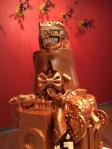
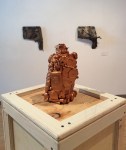
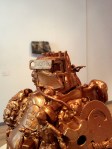
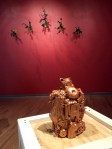
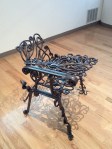
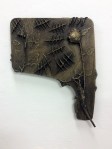
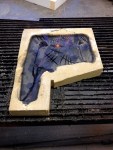
Here are two recently completed cast iron school desk sculptures, from the 39 & Holding series. To create these sculptures, I first placed sunflowers on the desk tops, and then resin bonded sand molds were packed around these forms. After the molds hardened, the desks & sunflowers were removed and the pieces were cast as open-faced molds. The first piece in this series collapsed during casting, but its irregular form was incredibly intriguing, so I decided to work with the casting in this raw state. After being cast, these pieces were heated & finished with a brass brush & paste wax, which gave them a rich, lustrous finish.
The title of this series references the classic Jerry Lee Lewis song “39 & Holding,” a tune about the inevitable cycles of aging which became considerably more relevant in the past couple of years as I transitioned out of my thirties. I decided to carve thirty-nine hash marks into each of the molds, creating a deep, gestural tally to signify the passage of time. Sunflowers have long been featured in both art and religion as symbolic markers of growth and decay, and they were a prominent fixture in the rural landscape where I grew up, so I had a range of conceptual, art historical, and auto-biographical reasons for using these flowers as imagery.
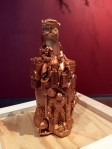
39 & Holding (Collapsed), cast iron with brass & wax finish
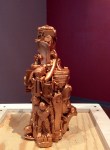
39 & Holding (Collapsed), side view
39 & Holding (Collapsed), detail view
39 & Holding (Collapsed), detail view
39 & Holding (Collapsed), detail view
Pattern for 39 & Holding (Collapsed)
39 & Holding, cast iron with brass & wax finish
39 & Holding, side view
39 & Holding, detail view
39 & Holding, detail view
39 & Holding, detail view
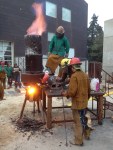
Burning graphite & denatured alcohol release agent off the mold
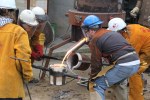
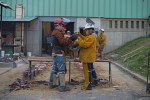
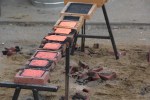
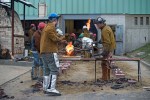
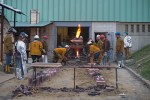
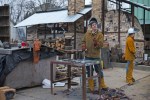
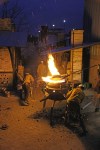
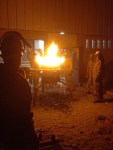
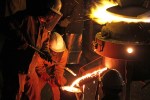
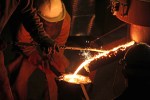
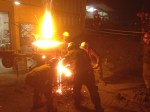
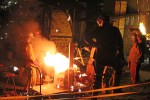
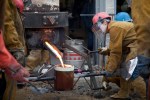
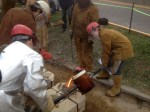
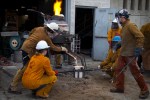
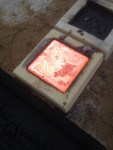
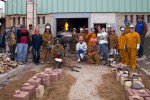
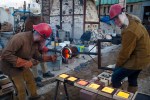
This past month has been a period of great activity in the West Virginia cast iron community. Shepherd University hosted their fall iron pour early in November and a week later, the sculpture program at West Virginia University hosted our fall iron pour. I am pleased that Shepherd University sculpture coordinator Christian Benefiel, Fairmont State University sculpture coordinator Jeremy Entwistle, and myself have continued to collaborate and get our student involved to make these events run in a safe and efficient manner. The palpable teamwork and camaraderie exhibited by all participants has affirmed my belief that a vibrant cast iron community is emerging in our state. Here’s some images and videos from our events, big thanks goes out to students Violet Goode and Hannah Hicks for documenting our iron pour at WVU.
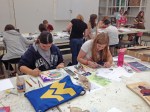
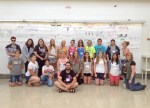
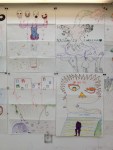
Students received instruction in both observational and mixed media drawing, while also exploring “Exquisite Corpse” drawings, a group collaborative exercise made famous by 20th-century Surrealists. Other camp highlights included button making, a storytelling session with entertainer Adam Booth, and various interaction with State 4-H Days participants. Now that we’ve had a successful maiden voyage for this camp, I am looking forward to planning next year’s session and growing both the number of participants and the scope of this program.
Sharing my sketchbook archive
Drawing outside the Creative Arts Center
Drawing outside the Creative Arts Center
Students cutting up magazines for button making
Storyteller Adam Booth entertaining campers
Storyteller Adam Booth entertaining campers
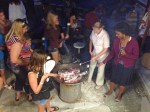
Making s’mores after storytelling
Working on “Exquisite Corpse” drawings at the Mountainlair
Working on “Exquisite Corpse” drawings at the Mountainlair
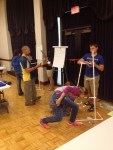
State 4-H Days tower building competition
State 4-H Days tower building competition
Students making buttons
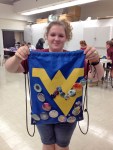
Student displaying her bounty of buttons
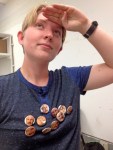
My favorite, the student who made a bunch of Dr. Phil buttons
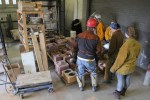
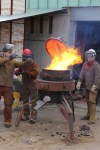
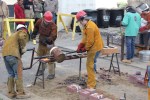
By far my favorite project from the past year was our Fall 2013 Iron Pour. Held on Friday, November 8, at the West Virginia University Creative Arts Center, this event helped inaugurate “Sputnik”, a portable iron-casting furnace that Fairmont State University sculpture faculty Jeremy Entwistle and I began building over the summer. Our pour crews cast around 3000 pounds of iron over the course of the day, which exceeded expectations for the capacity and durability of this new furnace. We also had excellent media coverage and a healthy turnout from the public, all of which contributed to making this event a resounding success.
Jeremy and I and students from our respective programs were joined by Shepherd University sculpture faculty Christian Benefiel and his students, as well as friends from the Pittsburgh iron casting community. In addition, alumni Emily Walley, Brett Kern, Jennifer Rockage McGhee, and Jamie Lester were invited to be visiting artists for the event, all of who cast iron for the first time.
Local businesses, including Construction Supply Company (CSC), 3 Rivers Iron and Metal, and Jack’s Recycling generously contributed materials and supplies for the iron pour. In addition, local metal fabrication company Wilson Works gave us great technical support by cutting out precision parts for “Sputnik”, and Morgantown restaurant Atomic Grill provided catered food for the event.
Big thanks goes out to Daniela Londoño Bernal for photographing this event, as well as Glynis Board from West Virginia Public Broadcasting for her excellent radio segment, which can be found here. The radio story also included a short video documenting the pour, which is linked below.
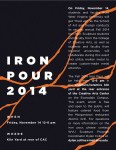
Fall 2013 Iron Pour poster by Charlie Scott
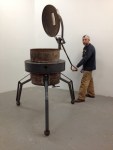
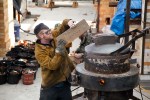
Jeremy opening “Sputnik”
Using fire to set the refractory material lining the furnace
Welding finishing touches on “Sputnik”
Christian Benefiel getting the furnace started
Charging the furnace with coke
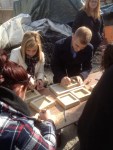
Iron pour attendees working on scratch block molds
TV reporter from WBOY in Clarksburg working on scratch block mold
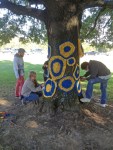
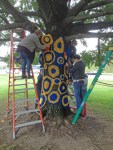
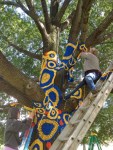
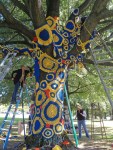
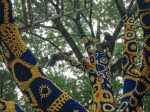
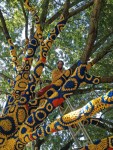
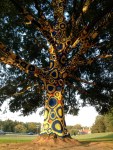
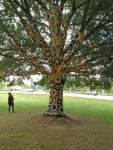
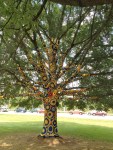
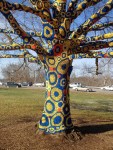
Looking back on 2013, I think the most challenging yet enjoyable project I took part in was the Morgantown Tree by artist Carol Hummel.
The School of Art and Design at West Virginia University invited Hummel to be a visiting artist for the 2013-2014 academic year. In addition to having a gallery exhibition, she put forth a proposal to work with students and community members to cover a large tree on our Evansdale Campus with crocheted yarn. Hummel has an impressive record of creating similar crocheted installations in Cleveland Heights, Ohio; Chicago, Illinois; Drangedal, Norway and New Delhi, India, so I thought it would be quite a coup for her to create a project in Morgantown.
Once Hummel’s project was approved, a workforce had to be organized to make all the crocheted elements. I served as Hummel’s de facto project manager, helping her coordinate with the university and community groups involved in the installation. Because this was a once-in-a-lifetime learning opportunity, we decided early on that our sculpture students would assist Hummel. Members of the Morgantown community, including campus knitting groups and residents at The Village at Heritage Point(a senior retirement community), also made invaluable contributions to this project. There was palpable synergy among all participants, and due to excellent teamwork and a stretch of great weather, the installation was finished in only six days.
The Morgantown Tree was created in conjunction with Morgantown’s 2013 celebration of The Year of the Tree (YOTT). By choosing a prominent location for this installation, Hummel’s project enjoyed high visibility for both on-and off-campus populations. She used an open stitch for this installation, which allows the trees to breathe without damaging their growth, and her chosen synthetic yarn will hold its color well for the next several years.
Hummel touring the Evansdale Campus to choose the right tree for her installation
Morgantown Tree proposal, paint on photograph
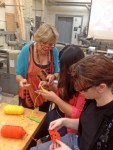
Hummel’s daughter Molly Sedensky instructing sculpture students on crochet techniques
Hummel instructing sculpture students on crochet techniques
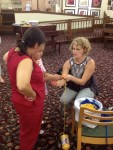
Crochet session with residents of The Village at Heritage Point
Crochet session with residents of The Village at Heritage Point
Hummel’s artist lecture, Arts Monongahela Gallery in Morgantown
Crochet instruction following Hummel’s lecture
Crochet instruction following Hummel’s lecture
Crocheted circles gathered from students and the community
First day of assembling the installation, Saturday, September 14
Beginning work on the ground with students and volunteers
Using step ladders to continue up the trunk
Using extension ladders to continue up the tree
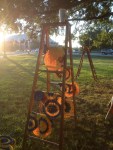
Sun setting on Day One of the project
Day Two of the project began with an interview by WBOY in Clarksburg
Tree starting to take shape with the help of students and volunteers
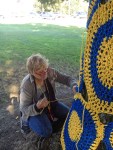
Teams of crocheters hard at work
Teams of crocheters hard at work
Molly Sedensky is all smiles, up working on a ladder
Hummel and students spending time on the ground crocheting more yarn circles
Finishing up work on Day Two
Day Three, students in the tree and Hummel on a hydraulic lift
Installation progressing up the tree
Tree conference between Hummel and a student, end of Day Three
Student putting the finishing touches on the bottom, start of Day Four
Student hanging out working in the tall branches
Detail of the tree at sunset, end of Day Four
Overall view at sunset, end of Day Five
Picking up the last of the circles from Morgantown’s dedicated crocheters
Hummel inspecting the tree, Day Six
Finished installation, Thursday, September 19
Hummel’s visiting artist lecture at the Creative Arts Center’s Bloch Hall
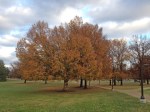
Morgantown Tree around the beginning of October
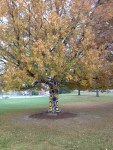
Detail of the tree in autumn
Detail of the tree in autumn
Tree in early December, with most of the leaves having fallen off
Installation detail in late autumn
Installation detail in late autumn
Tree in mid-December, after one of our first snowfalls
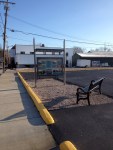
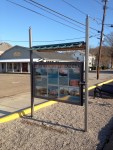
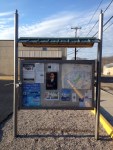
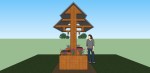
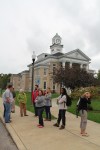
This project was initially focused on creating an artisan co-op in Elizabeth, West Virginia, which would enable community members to sell their locally made products. Due to space and logistical issues, this part of the project never came to fruition. Instead, we focused on the secondary aspects of the project, which involved refurbishing local business signage and building a kiosk for sharing historical and community information. The Sign Factory in Morgantown did a great job printing both the historical and the business signage, and fabrication of the kiosk was finished this past summer. After the kiosk was delivered to the community members, they installed it this fall on the town square in Elizabeth.
This project also generated a great deal of conceptual drawings and unrealized plans, and I have included these images in the slideshow because they are interesting artifacts of the process. This project went on much longer than I anticipated, but I am pleased with the results, and I think the community members and my students both learned a great deal.
Finished kiosk installed across from Wirt County Courthouse
Front view of kiosk with historical infographic
Side view of kiosk with historical infographic
Side view of kiosk with community information
Front view of kiosk with community information
Fabricating kiosk in WVU metalshop
Students James Pfaff and Ben Gazsi welding kiosk posts
Student Kelsie Lily grinding base plates for posts
Historical infographic by the Sign Factory
Kiosk design from community members
Hope Shop sign by the Sign Factory
Jerry’s Computer Repair sign by the Sign Factory
Kiosk design, 2nd Draft, by Ben Gazsi
Kiosk design, 2nd Draft, by Ben Gazsi
Kiosk design, 2nd Draft, by Ben Gazsi
Kiosk design, 1st Draft, by Ben Gazsi
Kiosk design, 1st Draft, by Ben Gazsi
Kiosk design, 1st Draft, by Ben Gazsi
Conceptual drawings for artisan co-op
Conceptual drawings for artisan co-op
Conceptual drawings for artisan co-op
Historical information on Elizabeth
Meeting with community members for walking tour of Elizabeth
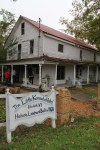
Tour of The Little Kanawha Hotel, proposed site for artisan co-op
Interior of Little Kanawha Hotel, proposed site for artisan co-op
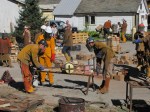
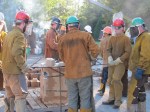
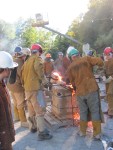
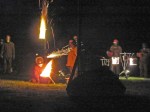
This past weekend, my colleague Jeremy Entwistle and I took students from our respective sculpture programs at Fairmont State University and West Virginia University to Salem, New York, for the 7th Annual Intercollegiate Iron Pour at Salem Art Works (SAW). We were invited to SAW by their Foundry Director Michael “Bones” Bonadio, who was a visiting artist for our sculpture programs last spring. The weather all weekend was spectacular, there was a great spirit of camaraderie, and we had the distinction of traveling the farthest of any schools in attendance, all of which contributed to making this a worthwhile journey. Besides the iron pour, other highlights of this event included a Friday night pyrotechnic performance, The Temporally Coincident Occurences of Causal Events, by New England Sculpture Service Manager of Operations Marjee Levine and students from the Massachusetts College of Art and Design, an inspiring guest lecture by veteran iron artist Joe McCreary, and some terrific exhibitions of artworks created by both emerging artists and iron pour attendees.
Sculpture students breaking iron to prep for the pour
First tap of iron from the furnace
Cleaning slag from the crucible in preparation for pouring molds
Jeremy and Bones pouring molds
Jeremy & Bones pouring molds
View from the foundry floor
Getting our crucible filled with iron
Slagger scraping our crucible of iron
Preparing to pour a big mold
Pouring the big mold
Finishing up pouring the big mold
Students pouring iron into a form made from sheets of sugar
Dropping bottom on the furnace at the conclusion of the iron pour
Jeremy breaking out molds the next morning
Students breaking out their molds the day after the pour
Iron performance by MassArt crew
Iron performance by MassArt crew
Iron performance by MassArt crew
Iron performance by MassArt crew
Outdoor sculpture by Mark DiSuvero
Columnar cast iron sculpture on the grounds
Steel and paper sculpture on the grounds
Cast iron portrait bust on the grounds
Installation on the grounds & buildings
Work from “Young and Emerging Artists Exhibition” in Barn 2
Work from “Young and Emerging Artists Exhibition” in Barn 2
Work from “Young and Emerging Artists Exhibition” in Barn 2
Work from “Young and Emerging Artists Exhibition” in Barn 2
Work by WVU sculpture student Charlie Scott in Barn 1’s “Renegade Show”
Work by WVU sculpture student James Pfaff in Barn 1’s “Renegade Show”
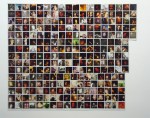
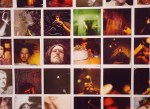
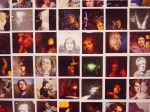
My work will be featured in the upcoming thematic juried exhibition Art/Identity at Gallery 263 in Cambridge, Massachusetts. I am represented in this show by Face value, a grid of approximately 270 Polaroid self-portraits taken over the course of a decade. This piece began at a very introspective time in my life, when I had the impulse to document the mundane aspects of day-to-day existence. Because I didn’t have a clear sense of how these pictures would be arranged, or whether this documentation was even important to my art practice, I was able to approach this project in a playful, experimental manner. Over time, I realized that this accumulation of photographs was a great format for charting my shifting, transformative sense of personal identity.
Face value, 270 Polaroid self-portrait photographs, 51 x 60 inches













































































































 Dylan Ethan Collins