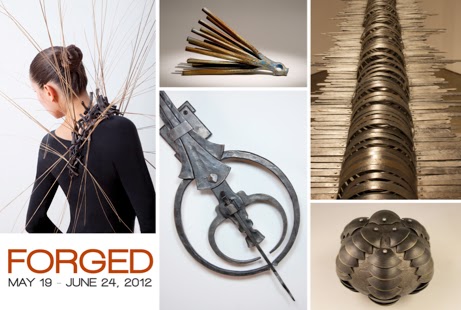
I am happy to report that one of my recently completed sculptures will be included in Forged, a group exhibition in Alexandria, Virginia, at the Torpedo Factory Art Center’s Target Gallery. 80 artists submitted work to this exhibition focusing on contemporary approaches to forged metal work, and only 21 total pieces were chosen, so I anticipate that this will be an excellent show.
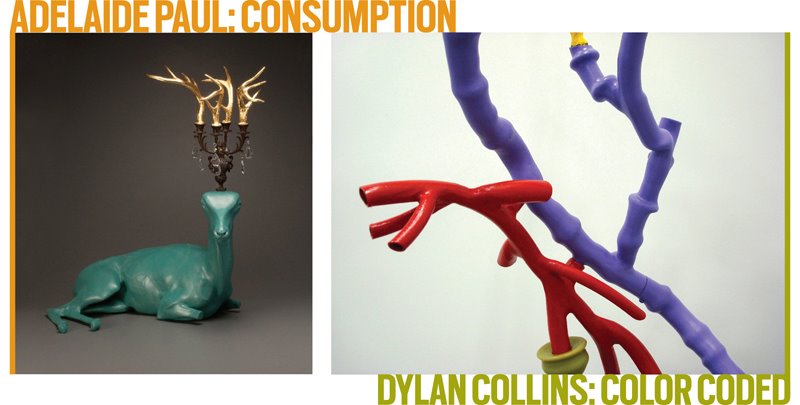
I had a great time last week as a guest of the Department of Art at Mississippi State University. My solo exhibition Color Coded, on view in the McComas Gallery, was held concurrently with Consumption, a solo exhibition by Adelaide Paul on view in the Visual Arts Center Gallery. Adelaide and I have very complimentary sensibilities and were well matched for this exhibition series. We gave joint artist’s talks, had critiques with assistant professor Critz Campbell’ssculpture class, and were treated to some wonderful closing reception festivities with the MSU community.
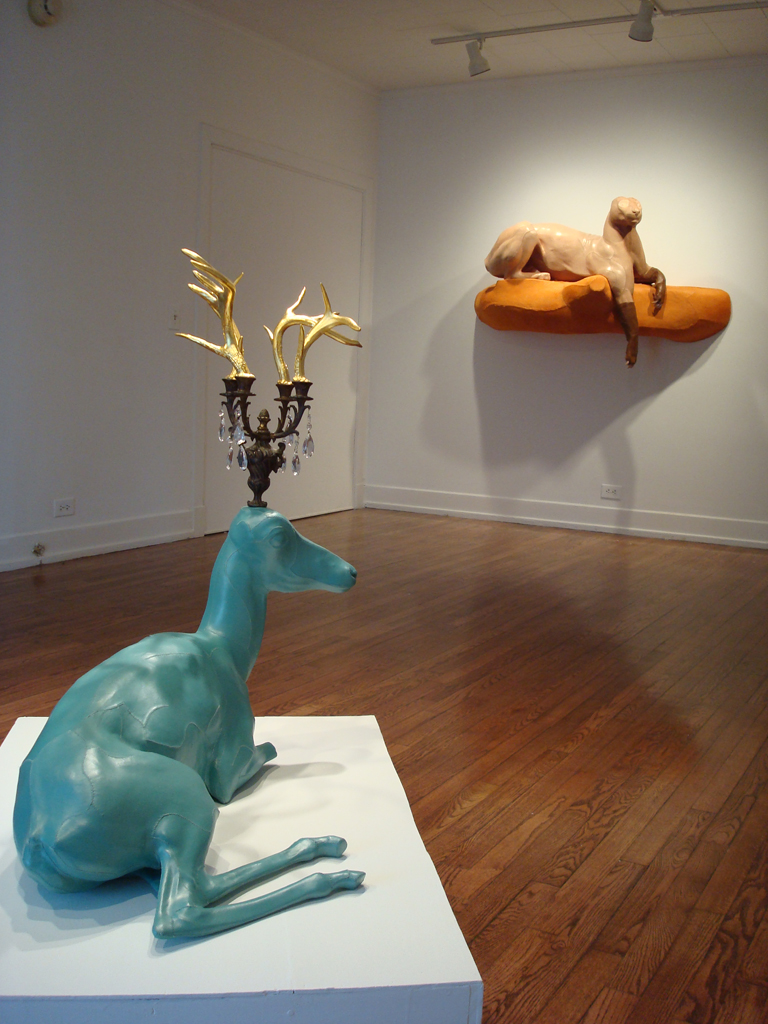
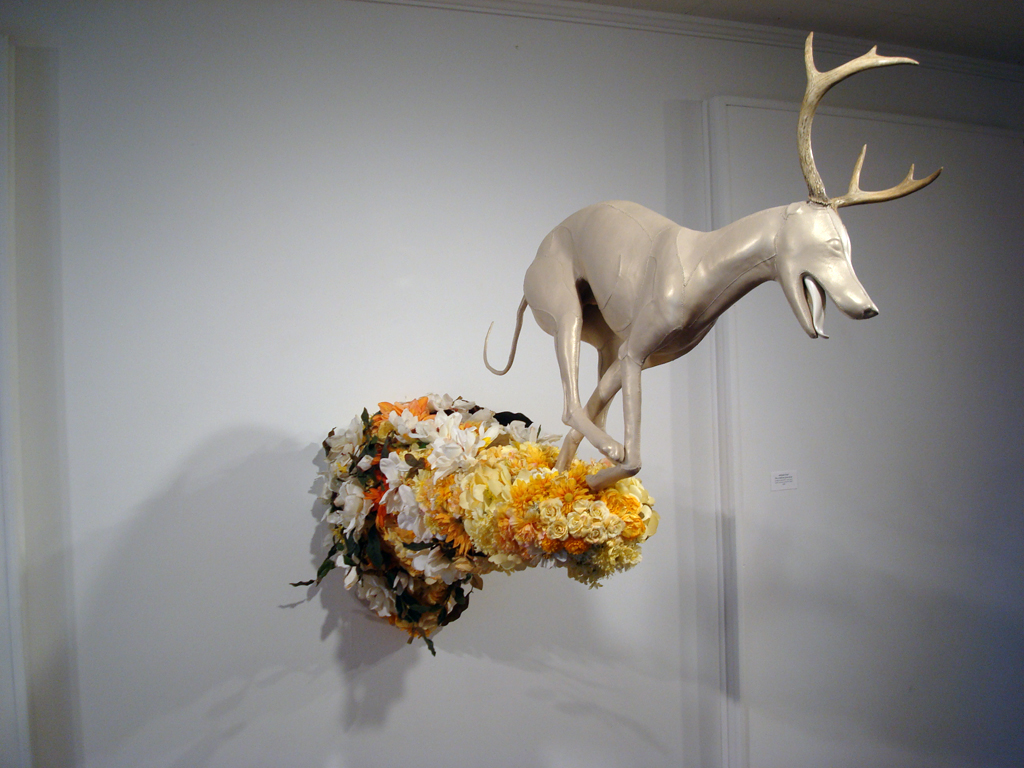
Adelaide Paul, Thrall (Babyblues) and In Your Dreams, Maxine
Adelaide Paul, Thrall (Babyblues) and In Your Dreams, Maxine
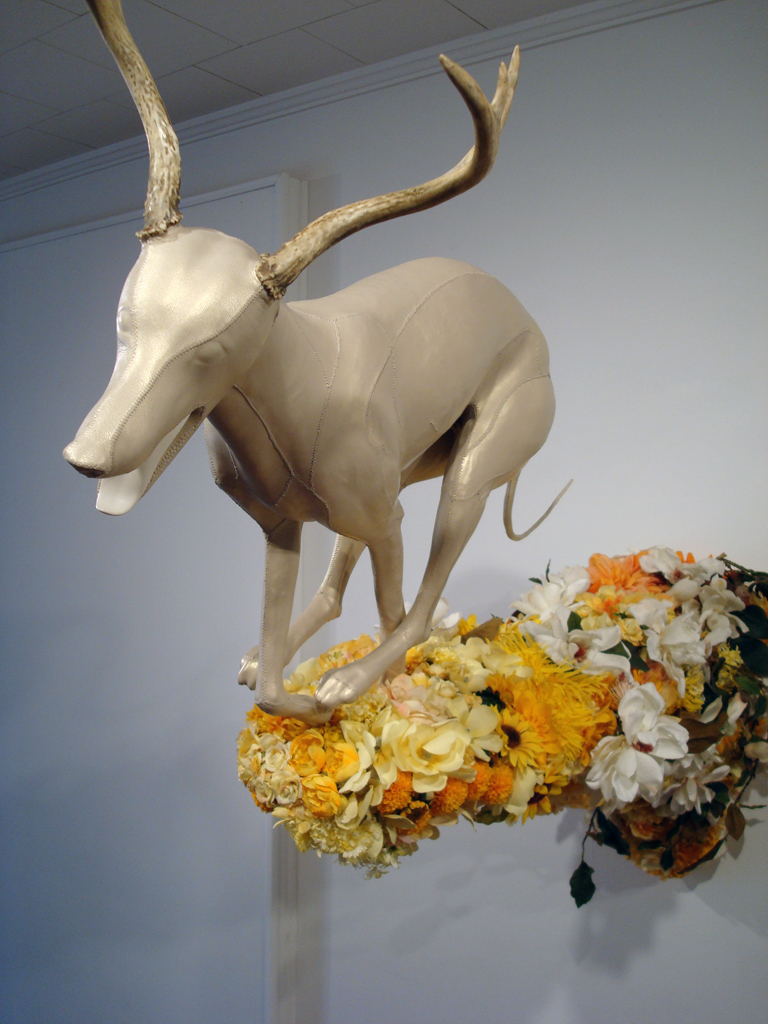
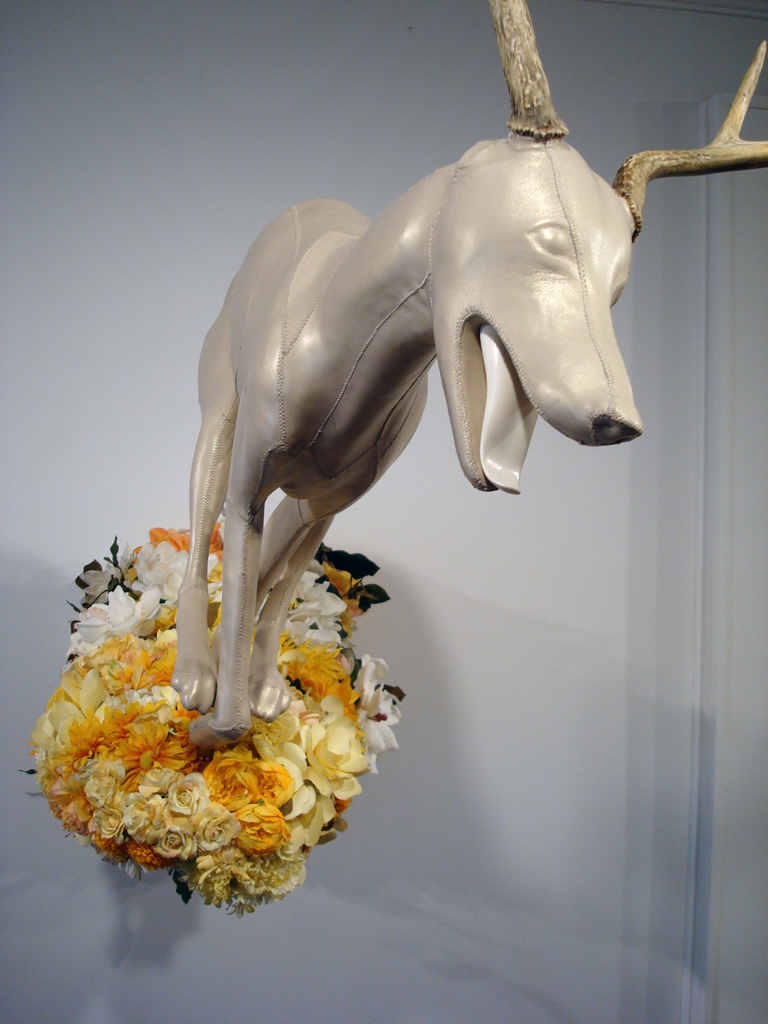
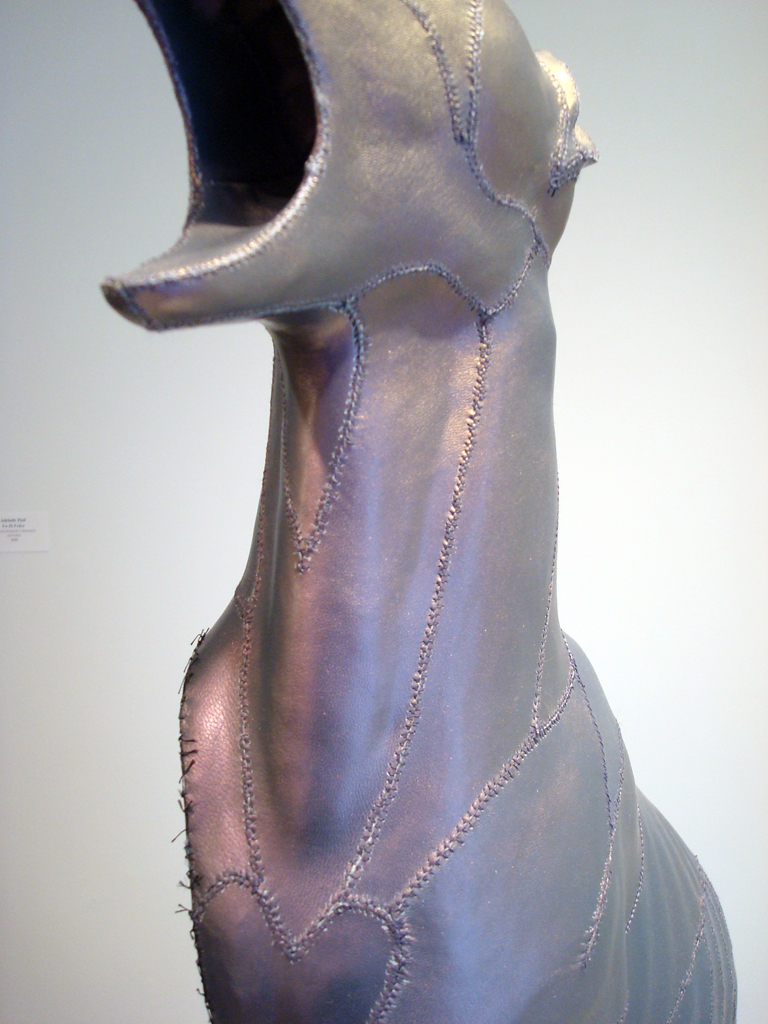
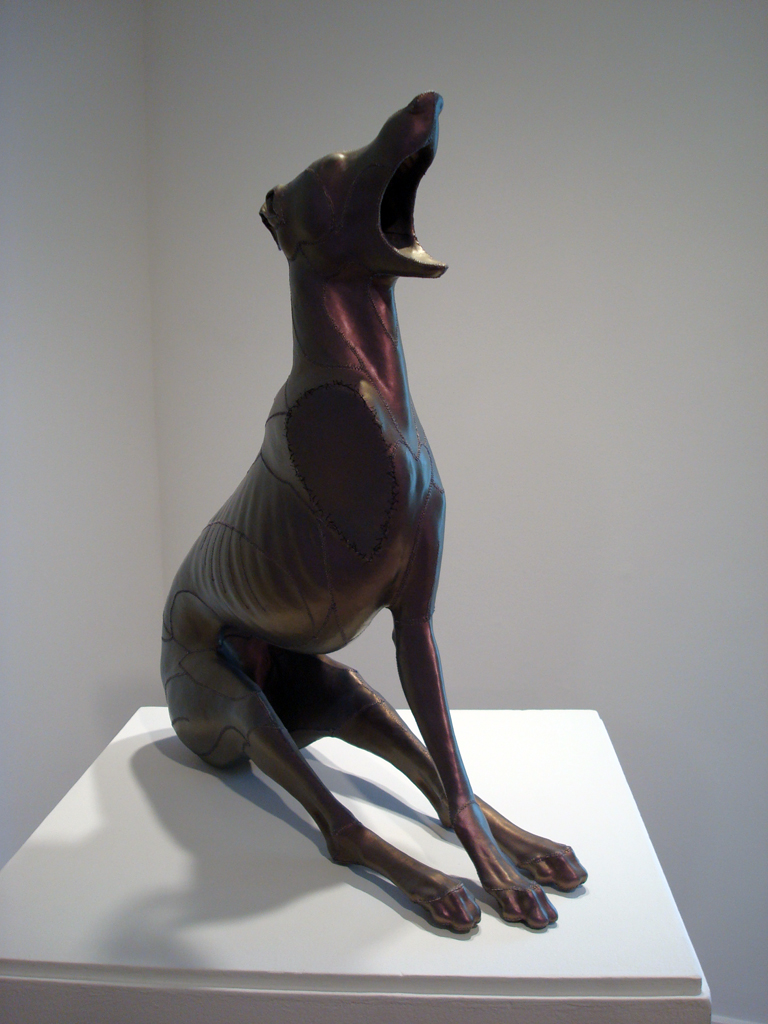
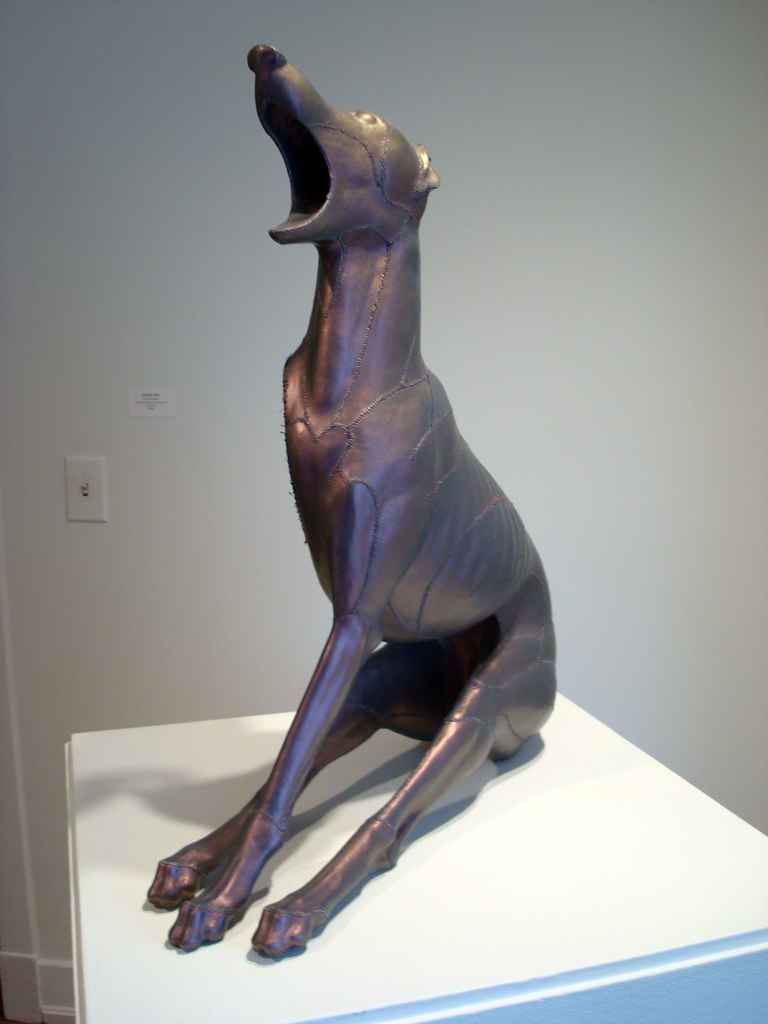
Adelaide Paul, Un Di Felice, modified taxidermist’s mannequin,leather, 2008
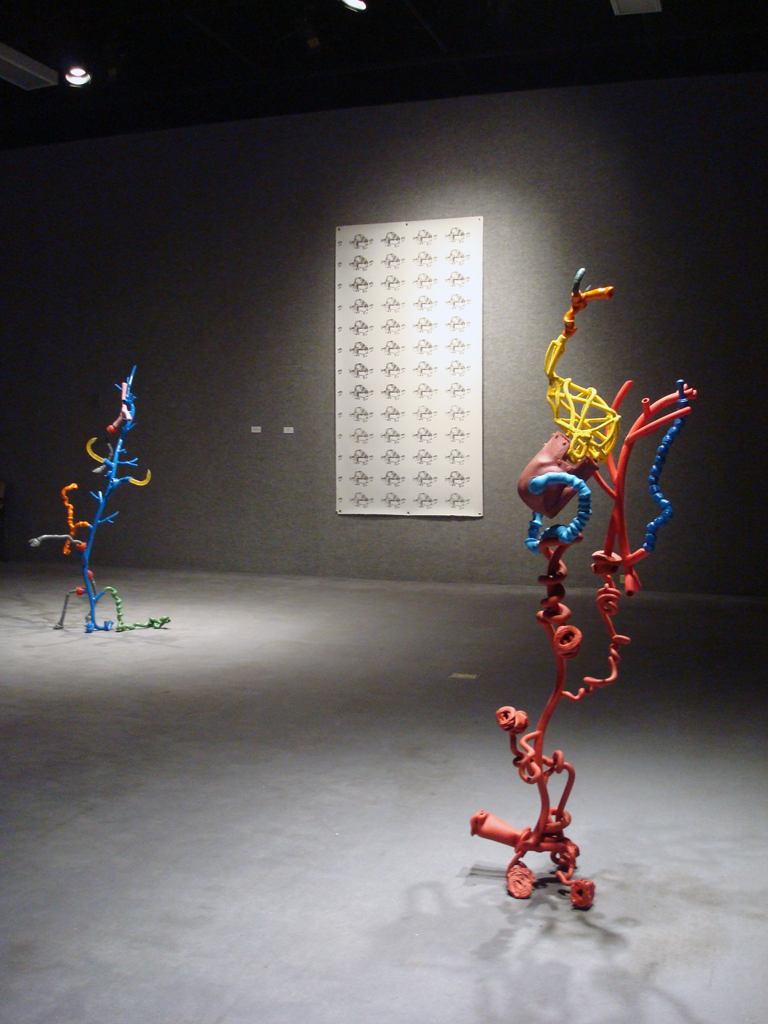
Gallery view, “Color Coded” exhibit
Gallery view, “Color Coded” exhibit
Gallery view, “Color Coded” exhibit
Gallery view, “Color Coded” exhibit
Gallery view, “Color Coded” exhibit
Gallery view, “Color Coded” exhibit
Gallery view, “Color Coded” exhibit
Gallery view, “Color Coded” exhibit
Gallery view, “Color Coded” exhibit
Exhibition postcard
Adelaide received a B.F.A. in ceramics from New York State College of Ceramics at Alfred University, and an MFA in Studio Art from Louisiana State University. She teaches at both MICA and the University of Pennsylvania School of Veterinary Medicine, and is a recipient of a PEW Fellowship in the Arts in 2007. Here is a terrific video about her studio work.
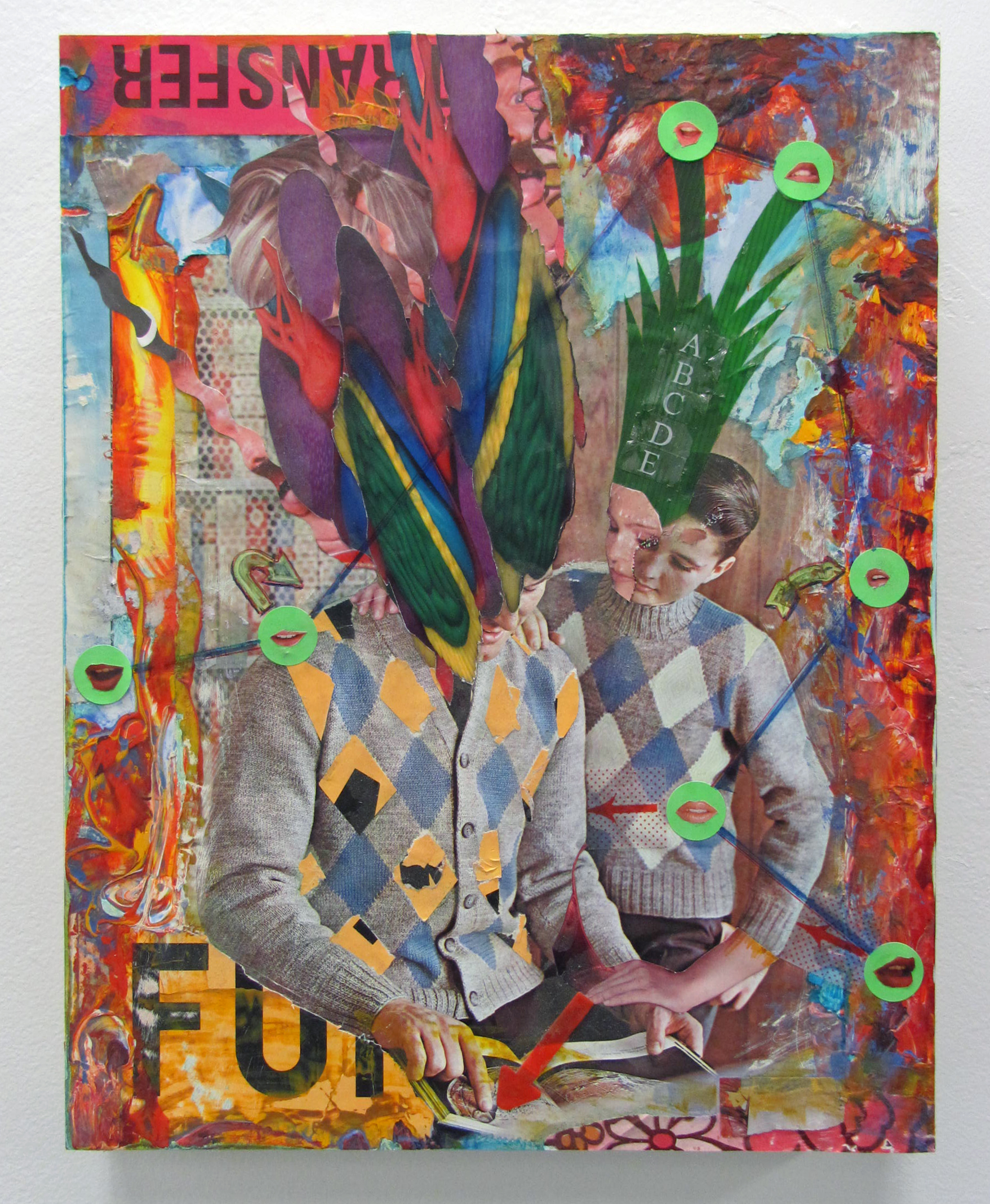
For the Sweater Constellationseries, I was interested in exploring how an image could evolve organically from cutting and pasting discarded materials and melding them with ink, paint, epoxy resin, and other media. By imposing order on randomly gathered elements, the finished pieces were imbued with an appealing element of chance. This method of working helped me create dense compositions and fragmented narratives, which I believe embodies the dizzying, contradictory impulses shaping contemporary life.
This series of work is currently on display at some excellent venues. One of these pieces was chosen for the regional juried exhibition OH + 5 2012, at the Dairy Barn Arts Center in Athens, Ohio, while two of the panels are featured in a show of contemporary drawing, Drawing Muchness, at the University of North Florida Gallery of Art in Jacksonville, Florida.
A cardigan for my first rodeo, 2011, collage, paint, and epoxy resin on panel
The pugilist’s pullover, 2011, collage, paint, and epoxy resin on panel
Lesson session (from A to V-neck), 2011, collage, paint, and epoxy resin on panel
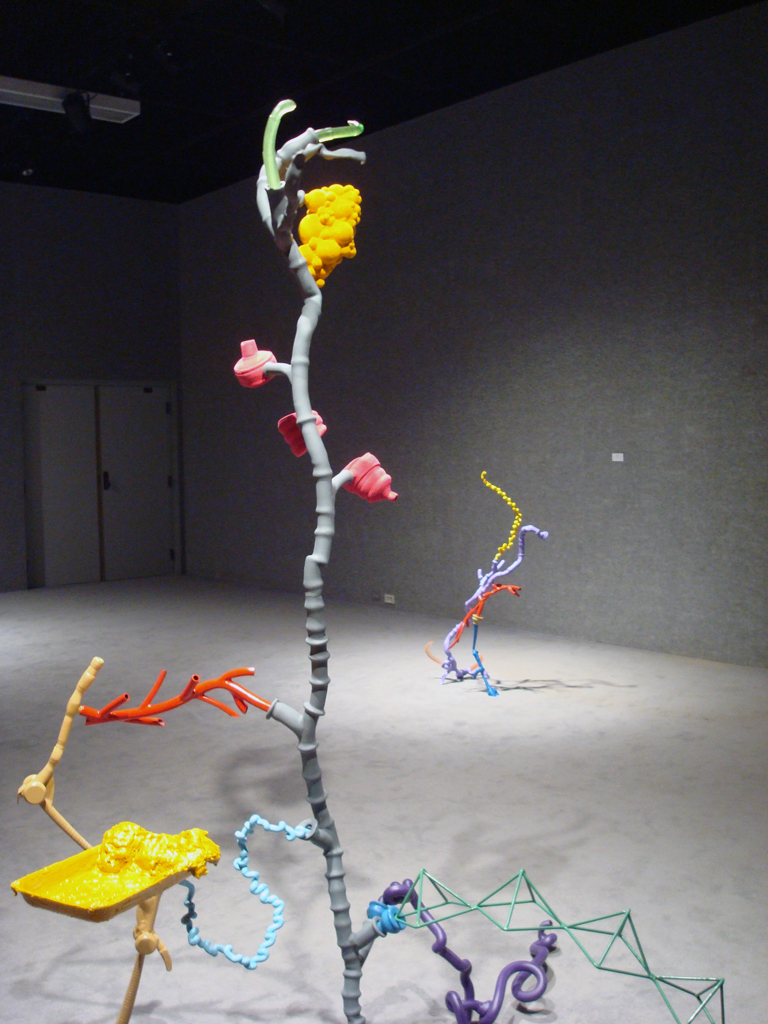
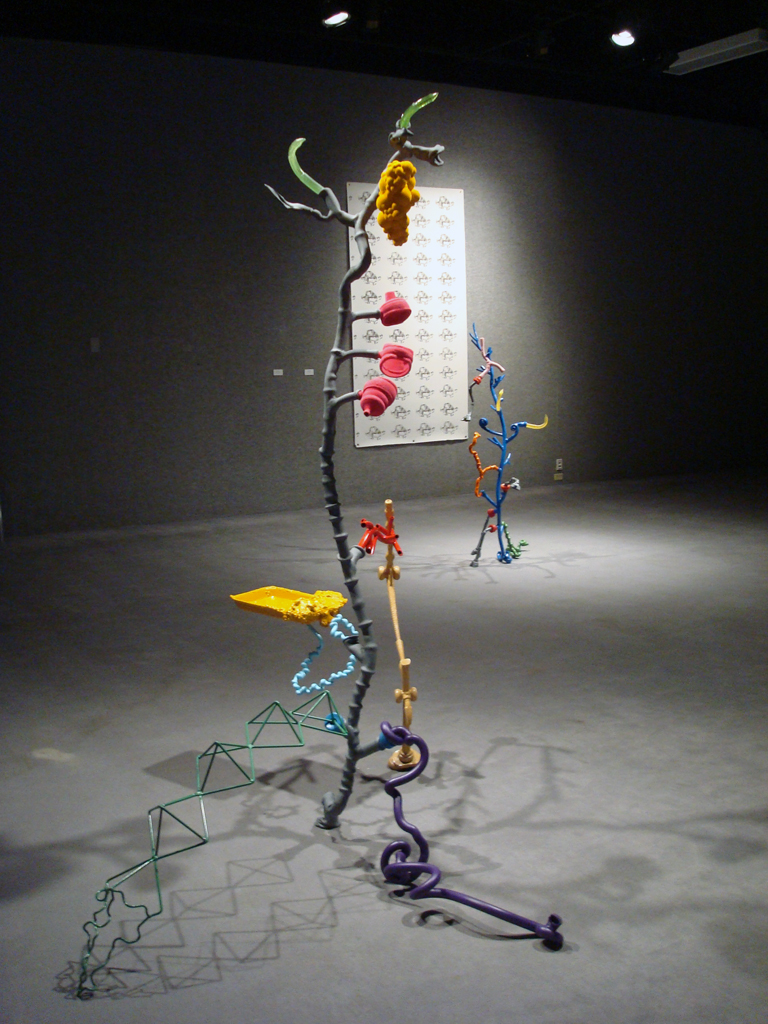
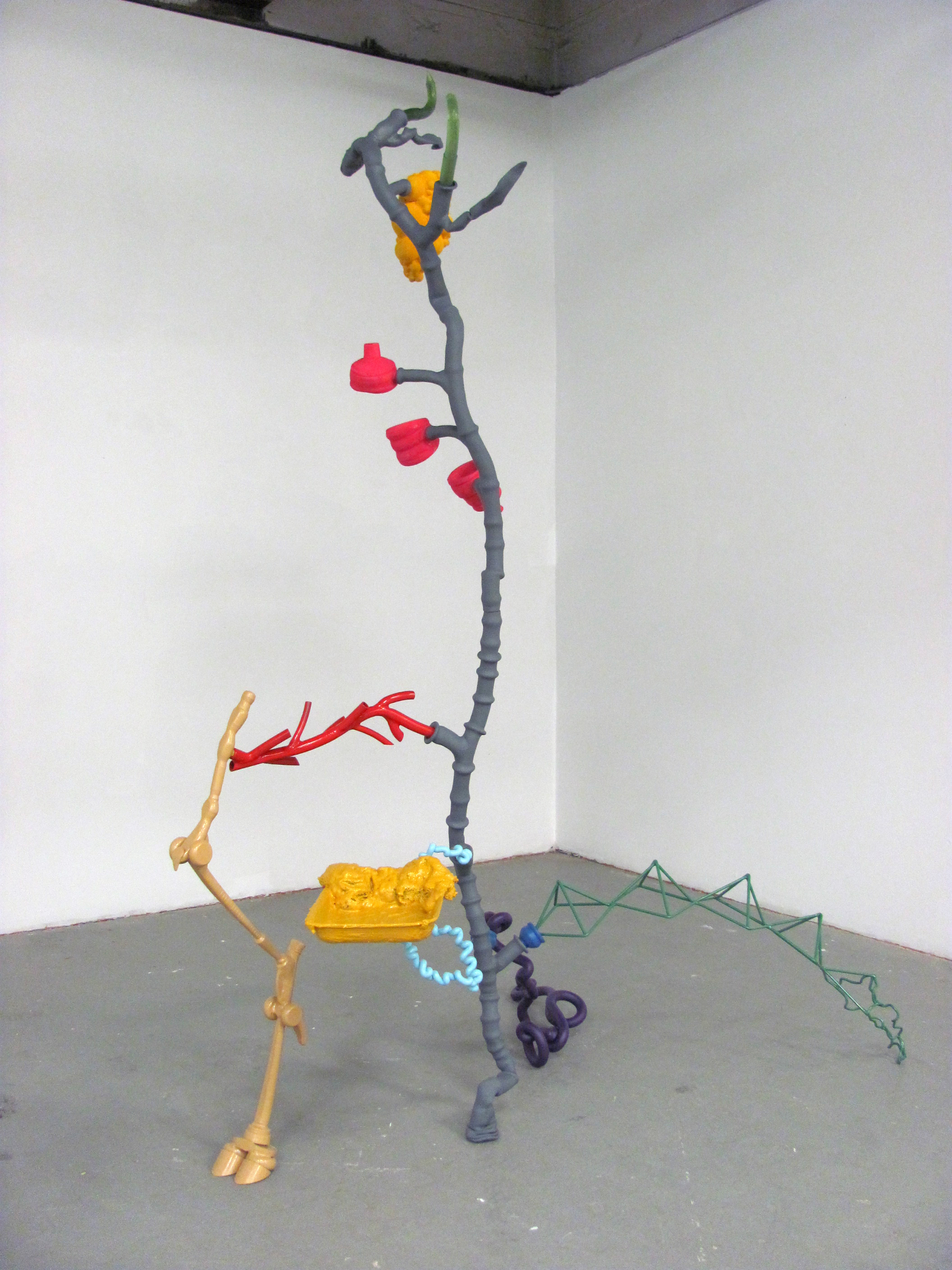
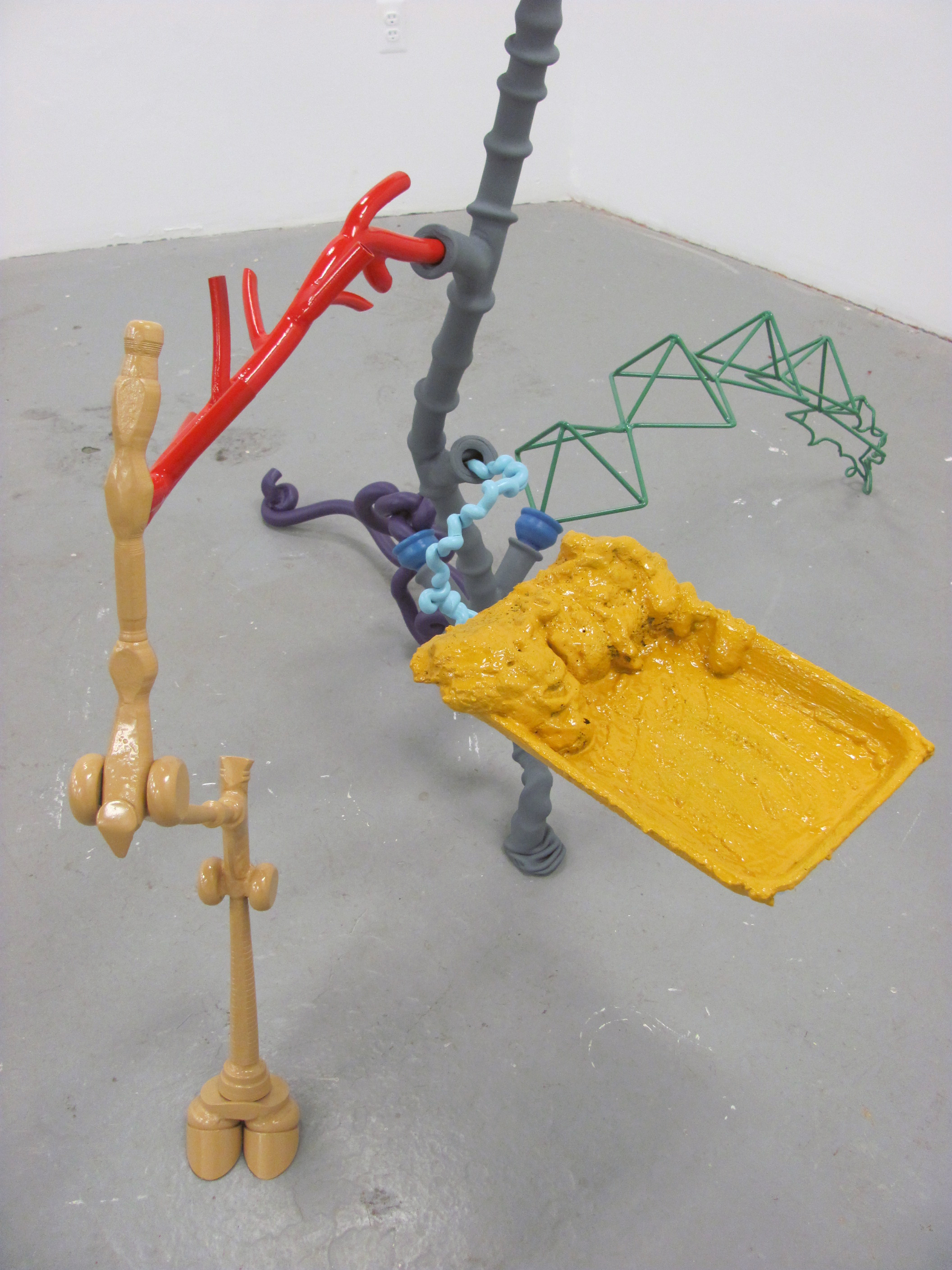
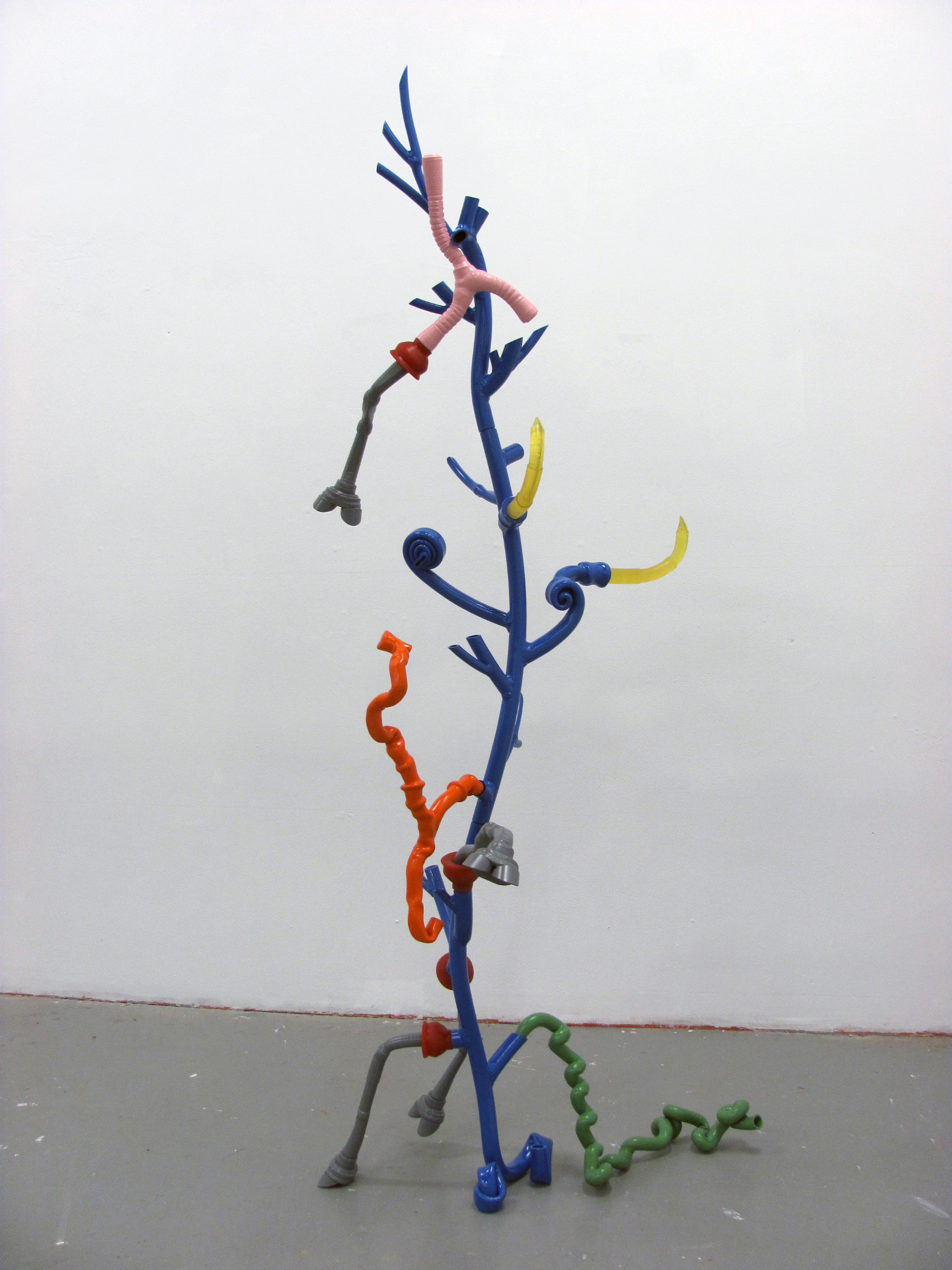
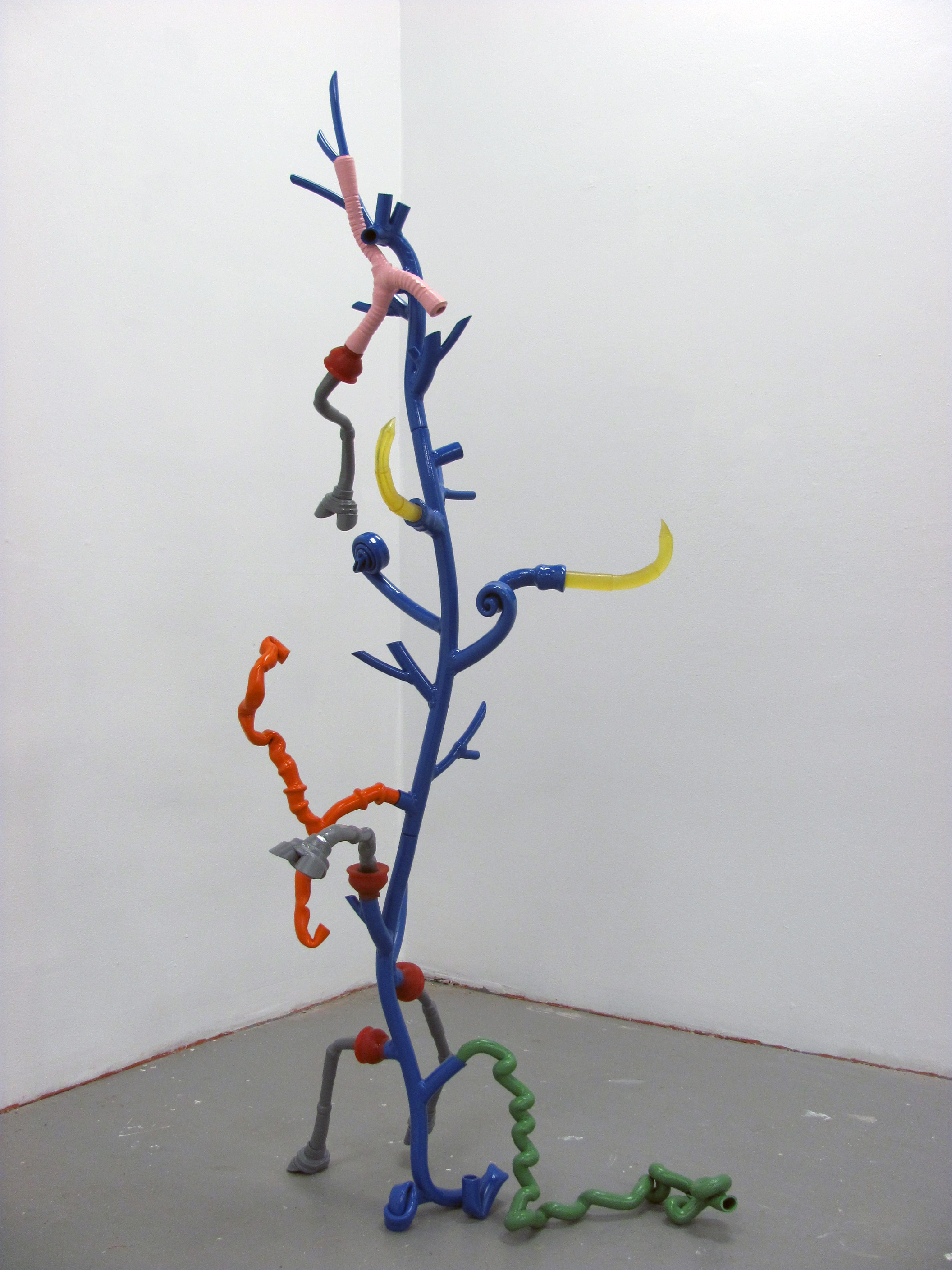
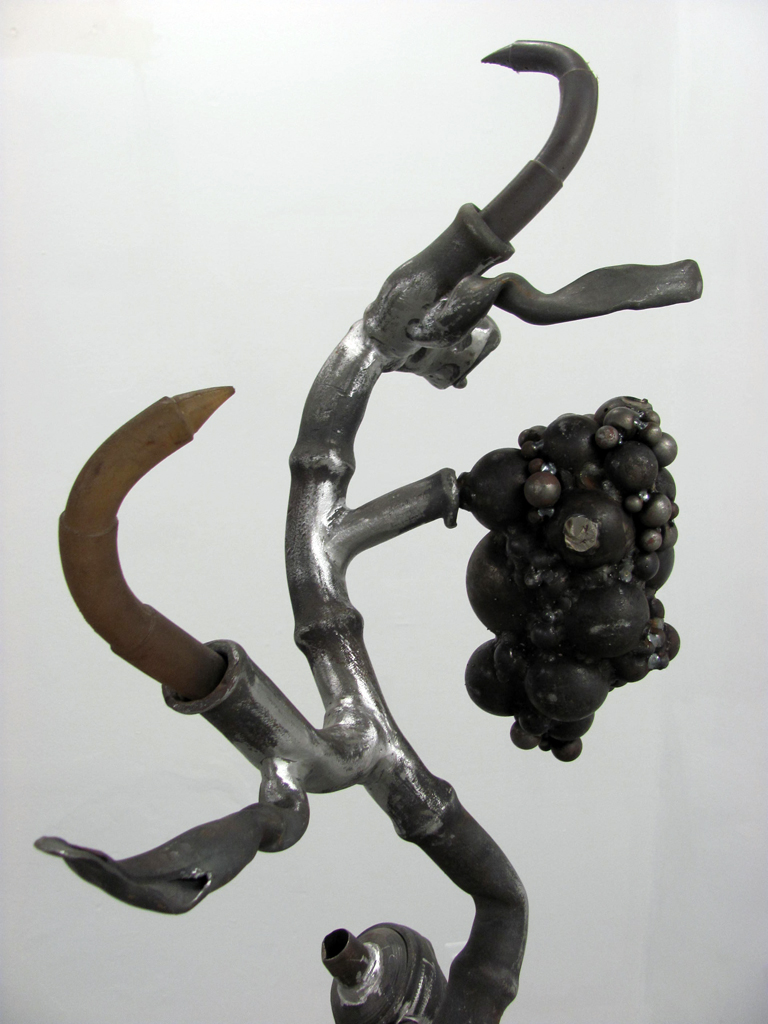
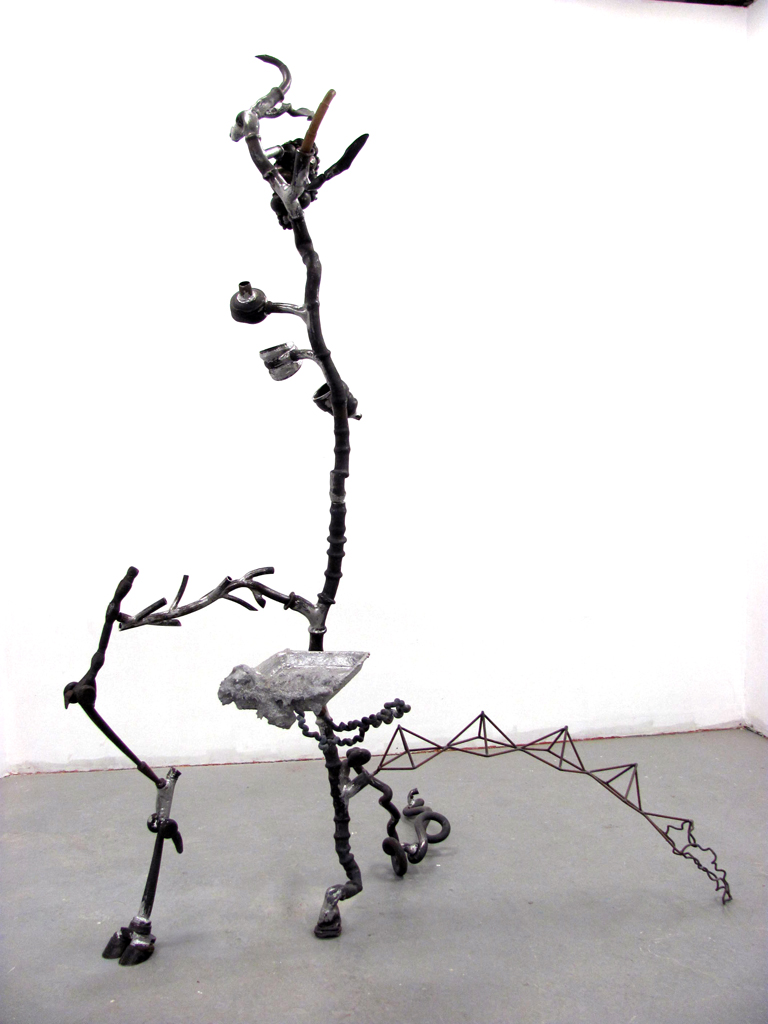
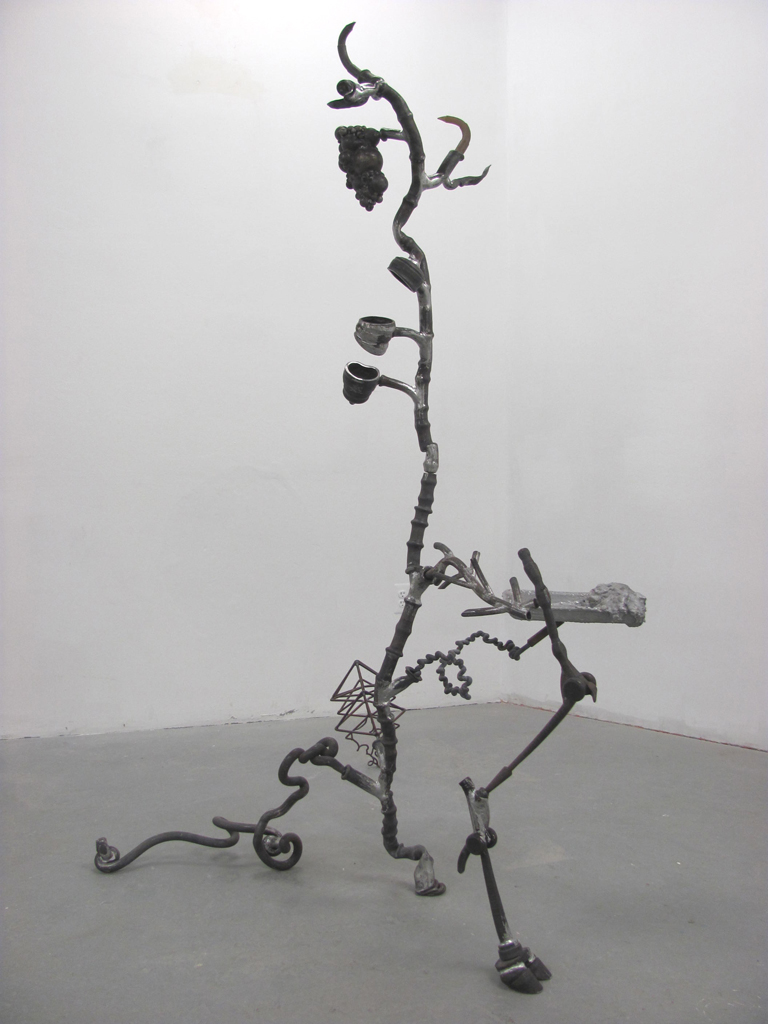
Here are images of two recently finished sculptures that I completed for a solo exhibition at Mississippi State University’s McComas Gallery. The sculpture From hoof to tray is making its debut with this exhibition, and How now blended cow is an older work that I modified for easier shipping.
From hoof to tray, painted steel, cast aluminum, flocking, cast plastic, cast rubber, 84″ x 66″x 58″
From hoof to tray, side view
Detail of leg and cast aluminum meat tray
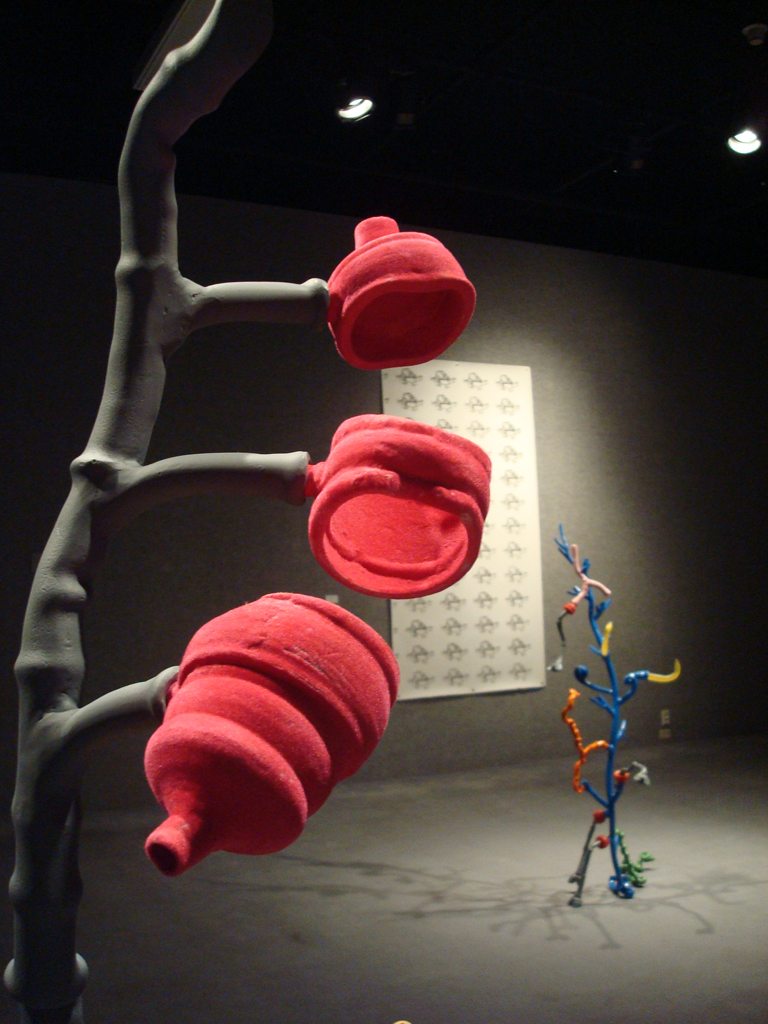
Detail of horns and flocked steel elements
Detail of flocked elements
Detail of flocked element and horn
From hoof to tray, painted with primer gray paint
Detail of leg and cast aluminum meat tray painted in primer gray paint
How now blended cow, steel, cast rubber, cast plastic, 66″ x 30″ x 27″
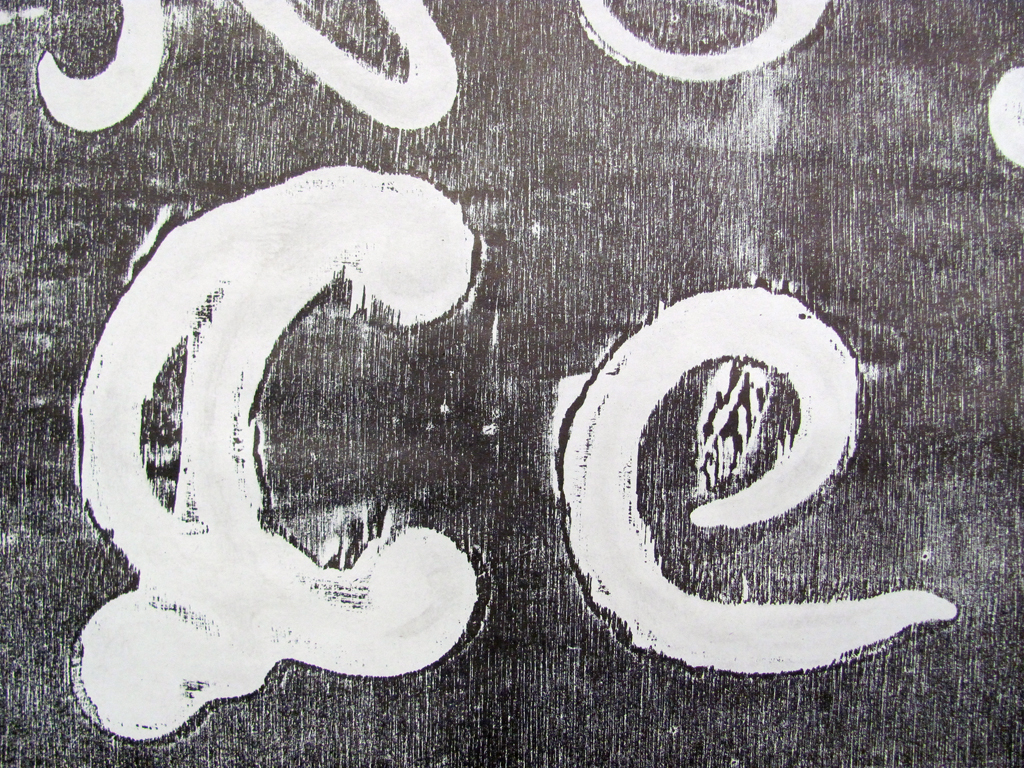
After a long hiatus from printmaking, I was really missing this medium, so I decided to make prints that brought together my knowledge of forging techniques with my interests in slang terminology, folk etymologies, and other forms of truncated language.
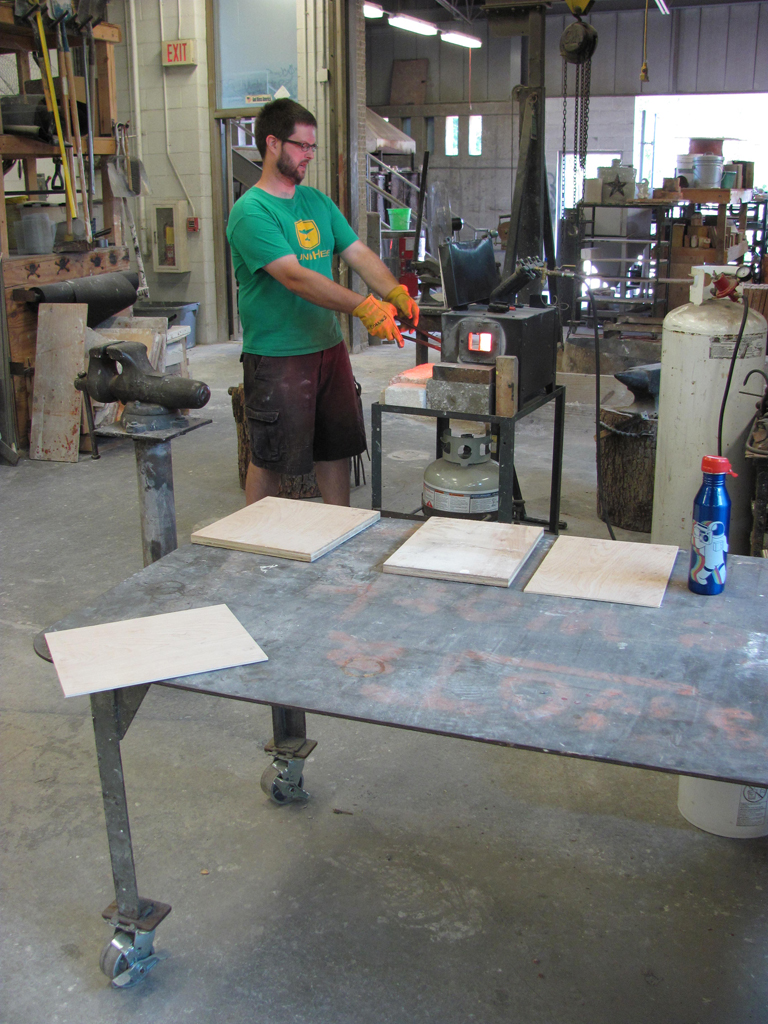
The Branded Woodblock Prints began by forging, twisting, and manipulating steel round stock to create lines of text. Then the steel text was heated in a forge and branded into a wooden plate. Next, the plate was cleaned with a wire brush to remove ash residue. Finally, these works were inked up and printed by hand.
This work spawned many new ideas I want to explore further, so I am excited to see where this series takes me. Big thanks to my friend and colleague Joseph Lupo, coordinator of the printmaking program at West Virginia University, for his assistance in creating this work.
Using a wire brush to remove ash and clean the plate
Lining up the second round of text for branding
Burning into the wooden plate to make a deep and unique impression
Branding the wooden plate
Pulling red-hot steel from the forge
Heating steel in the forge
‘Nuff Ced (Enough Said), detail
‘Nuff Ced (Enough Said), relief print, 2011
Sho ‘Nuff (Sure Enough), two color relief print, 2011
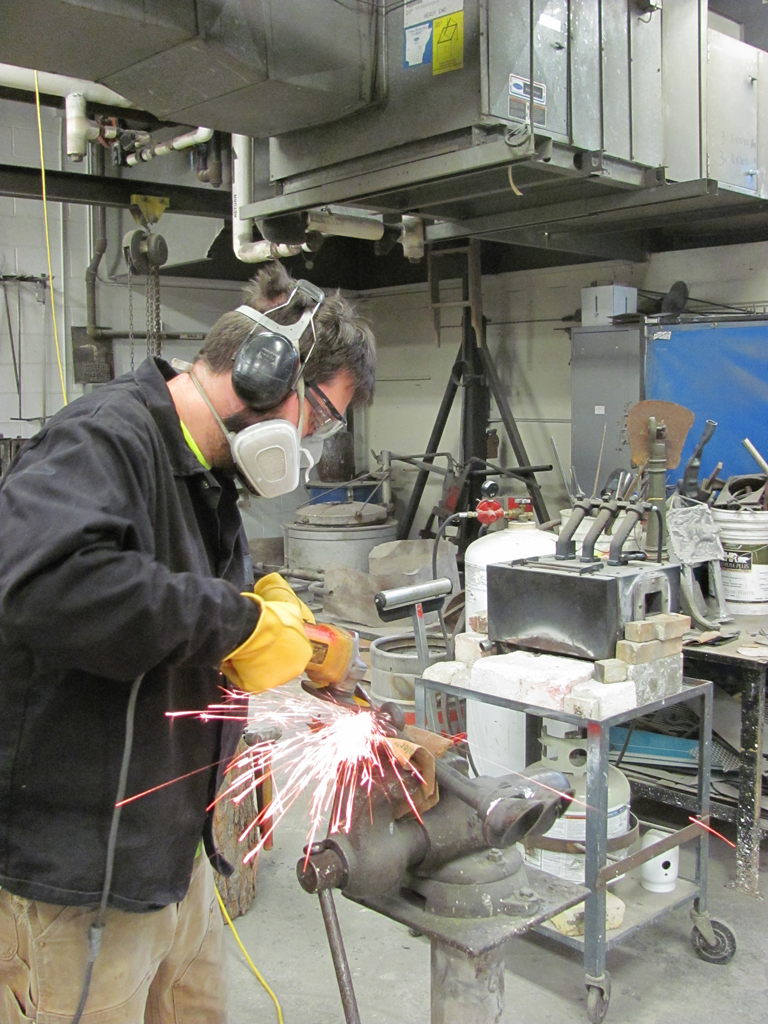
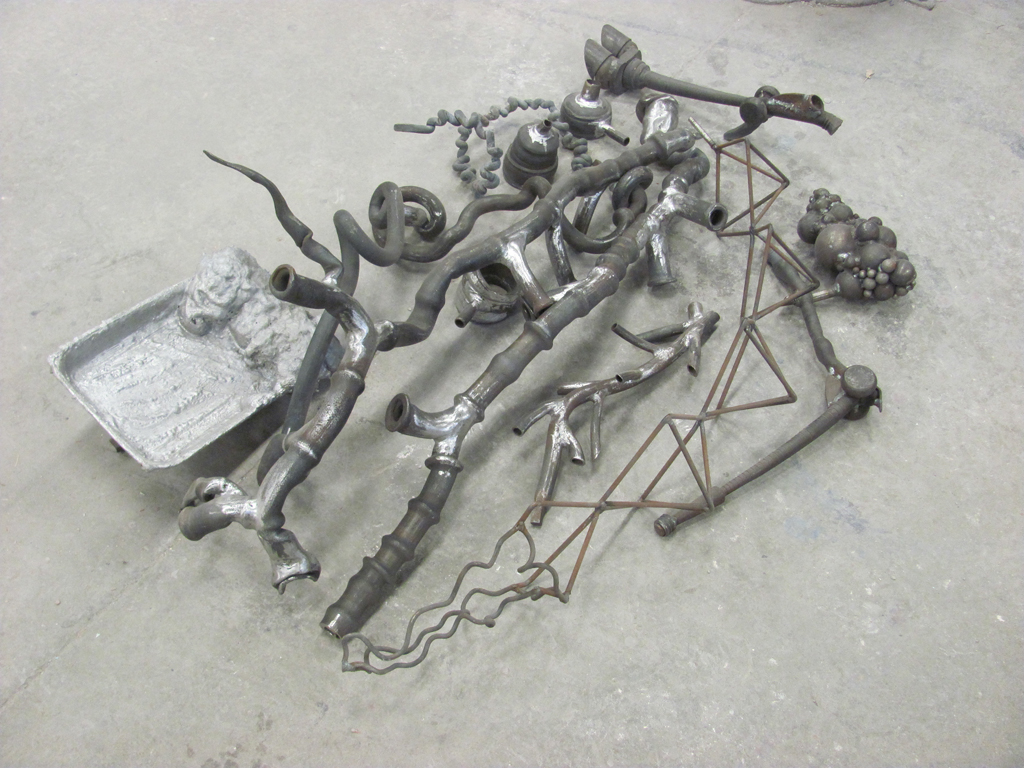
Here are some images of my newest sculpture, titled From hoof to tray.I’m working on grinding, filing, and sanding all the components so I can take it through the paint stage. This sculpture was particularly difficult to finish because it was fabricated in fits and starts, with many new elements added along the way. However, as I near the finish line, I couldn’t be happier with the results, and I am certain this piece will be a great capstone to my Color Codedseries.
After bending, thinking about the next step
Bending the main segment after heating
Using a rosebud tip to heat up the steel
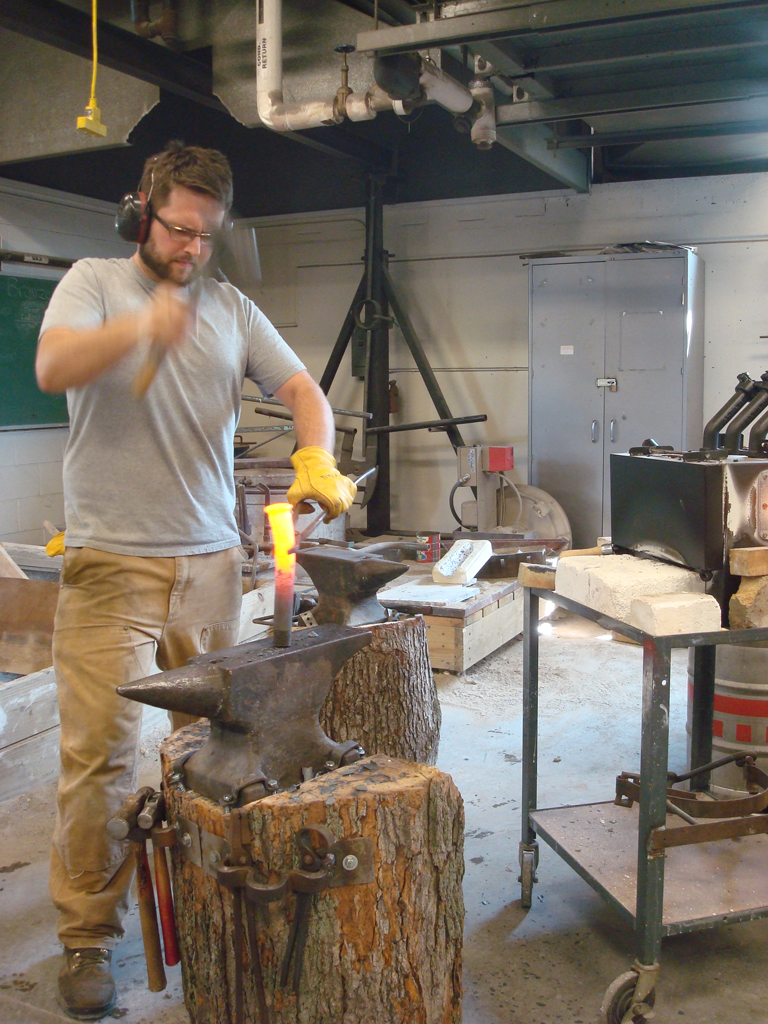
Forging tubing components in the metalshop
Forging tubing components in the metalshop
Forging tubing components in the metalshop
Detail of pattern
Aluminum casting pattern (styrofoam meat tray, spray foam, and wax)
Aluminum casting pattern (styrofoam meat tray, spray foam, and wax)
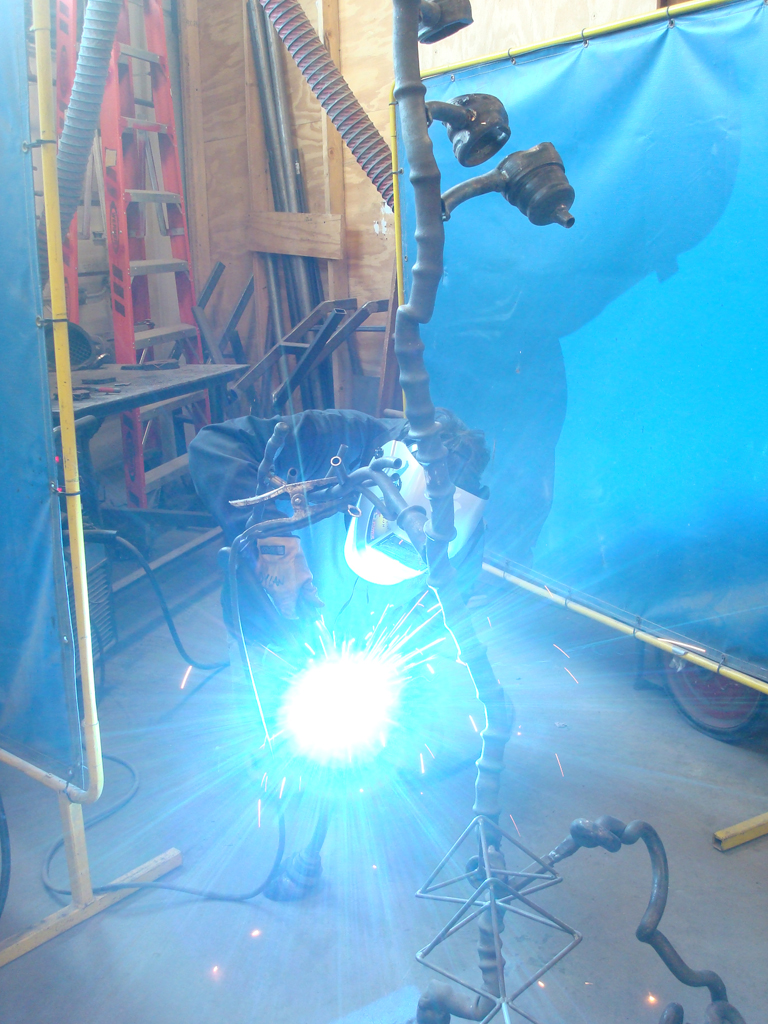
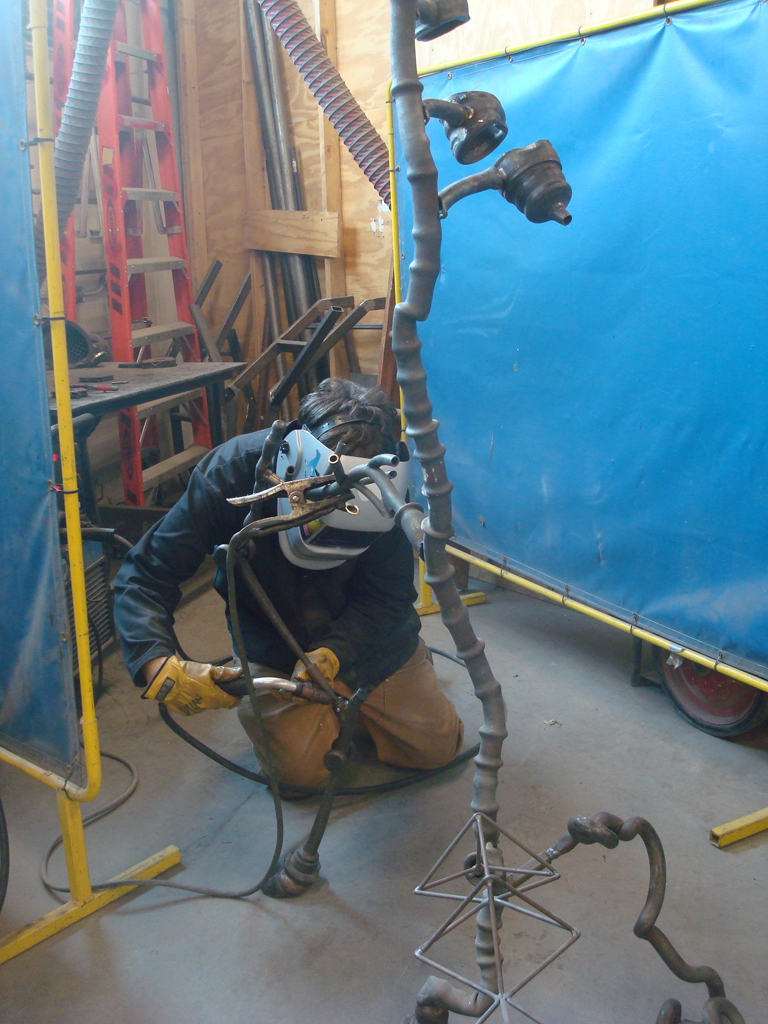
Finish welding on the leg component
Preparing to weld
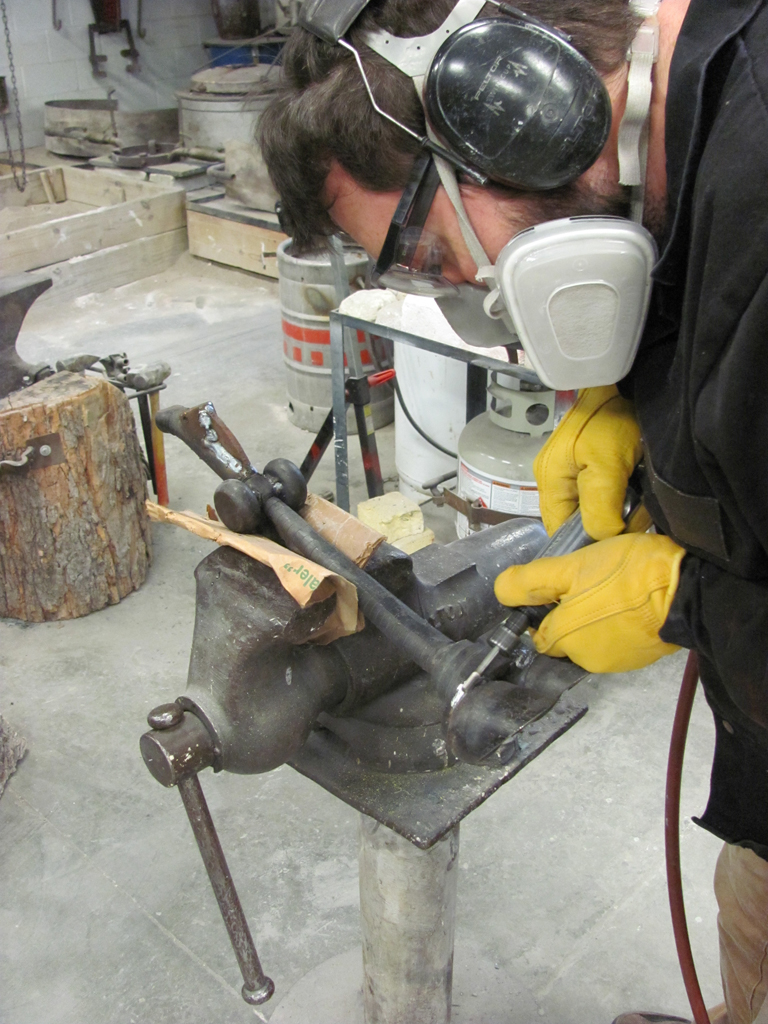
Using a die grinder for detail cleanup on the hoof component
Using an angle grinder to clean up the steel
Sculpture broken down into a manageable pile of parts
Me next to the sculpture to provide a sense of scale
Here is footage of the excellent bronze pour I conducted with my sculpture grads last Friday. For anyone unfamiliar with metal casting, here is some background on this process.
Bronze casting begins with artists creating a wax sculpture, also known as a pattern. The pattern is first encased in a mold made of plaster and sand mixed with water. Next, the mold is heated in a kiln for two days. This traditional method of bronze casting is known as “lost-wax casting”, because the original wax pattern melts out of the mold as it is heated, leaving a hollow cavity that will be filled with molten metal.
In preparation for the bronze pour, metal is melted in a furnace. As the metal is becoming molten, the hot molds are taken out of the kiln and placed in a sand pit near the furnace. Before casting metal, everyone dons protective gear to protect against the extreme heat. Teamwork is essential in a bronze pour, so once everyone is suited up, the team goes through a dry run of the procedure.
When it’s time for casting bronze, a crucible filled with molten metal is lifted out of the furnace with tongs. The crucible is then placed into a pouring device called a shank. Two team members operate the shank to pour metal into the molds, while another person uses a chain to raise and lower the device. After all the molds are poured, the crucible is placed back into the furnace. Once the molds have cooled off for a day, they are broken apart to reveal the castings and students grind, file, sand, and polish the bronze to create finished works of art.
Welcome to my studio blog. I will be using this site to share images of my artwork, process/fabrication info, exhibition news, and work from my friends.


























 Dylan Ethan Collins